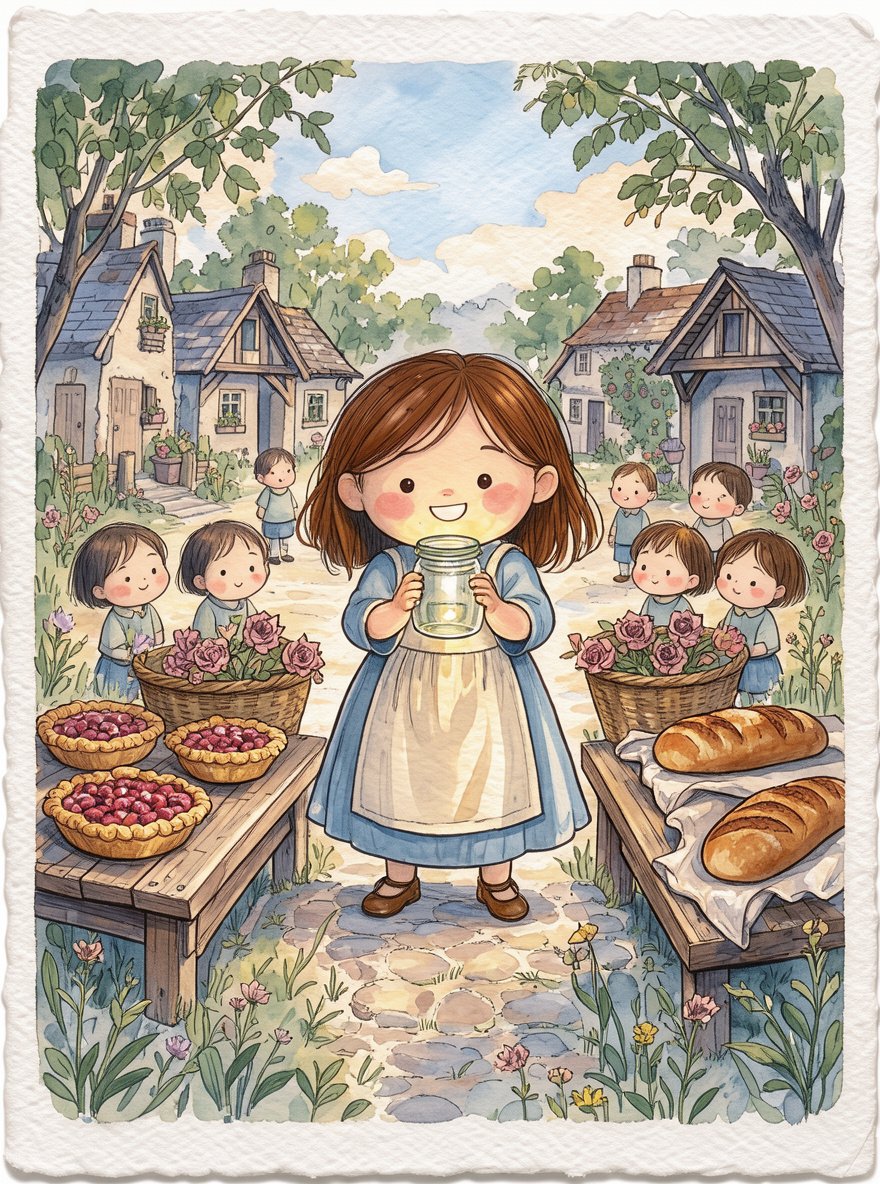
The Committee for Impossible Complaints
В крошечном кабинете при ратуше разбирают немыслимые жалобы горожан: говорящая опережающая тень, поющая закваска для хлеба, гном, который сам передвигается. Двенадцатилетний Феликс выясняет, что у каждой загадки есть обычное объяснение — если задавать правильные вопросы.
🌍 Английский, C1–C2 👶 9–10 лет 📖 23 стр. ⏱ читать ≈ 11 мин
Текст сказки
The Municipal Office for Unusual Complaints occupied the smallest room in Greymoor Town Hall, a converted broom cupboard with one desk, one filing cabinet, and a sign on the door that had been changed so many times it now simply read, in exasperated handwriting: PLEASE KNOCK. IT HELPS.
For thirty-one years, the office had been run single-handedly by a woman named Agatha Quill, who had heard every complaint a small town could possibly produce and had developed, as a result, an almost supernatural patience and an entirely unsupernatural desire to retire. When her knees finally gave her the excuse she had been waiting for, the town council did the only sensible thing available to them: they advertised for an apprentice, and they hired the first person foolish enough to apply, who turned out to be a twelve-year-old named Felix Okonkwo-Price, mainly on the strength of his having once talked a furious goose out of attacking the postman.
Felix's first morning began inauspiciously. A Mrs. Carraway from Willow Lane arrived at nine o'clock sharp to report that her shadow had, in her own words, "started arriving to things five minutes before I do, and frankly, it's getting insufferable."
Читать дальше
Agatha, halfway out the door with her coat already on, paused only to say, "Don't dismiss it. Half of them turn out to be nothing, and the other half turn out to be the only interesting thing that happens here all year. Good luck telling which is which," and then she was gone, leaving Felix alone with Mrs. Carraway and a complaint that sounded, on the face of it, entirely unhinged.
He might, on any other day, have agreed with whoever was thinking that this job was a mistake. Instead, out of a stubbornness he hadn't previously known he possessed, he asked Mrs. Carraway to describe exactly what she meant, and precisely when she had first noticed it.
It turned out, after twenty careful minutes of questioning that would have done credit to a detective twice his age, that Mrs. Carraway's shadow was not, in fact, arriving early to anything. Mrs. Carraway herself had recently started walking to the shops along the eastern side of the street rather than the western one, where the morning sun now fell differently across her path, which meant that her shadow, perfectly innocently, now stretched ahead of her rather than trailing behind. It had not changed its habits in the slightest. She had changed hers, and simply failed to notice.
Mrs. Carraway left looking faintly embarrassed and considerably reassured, and Felix spent the rest of the morning feeling rather pleased with himself, which lasted right up until the arrival, at half past eleven, of Mr. Dunphy.
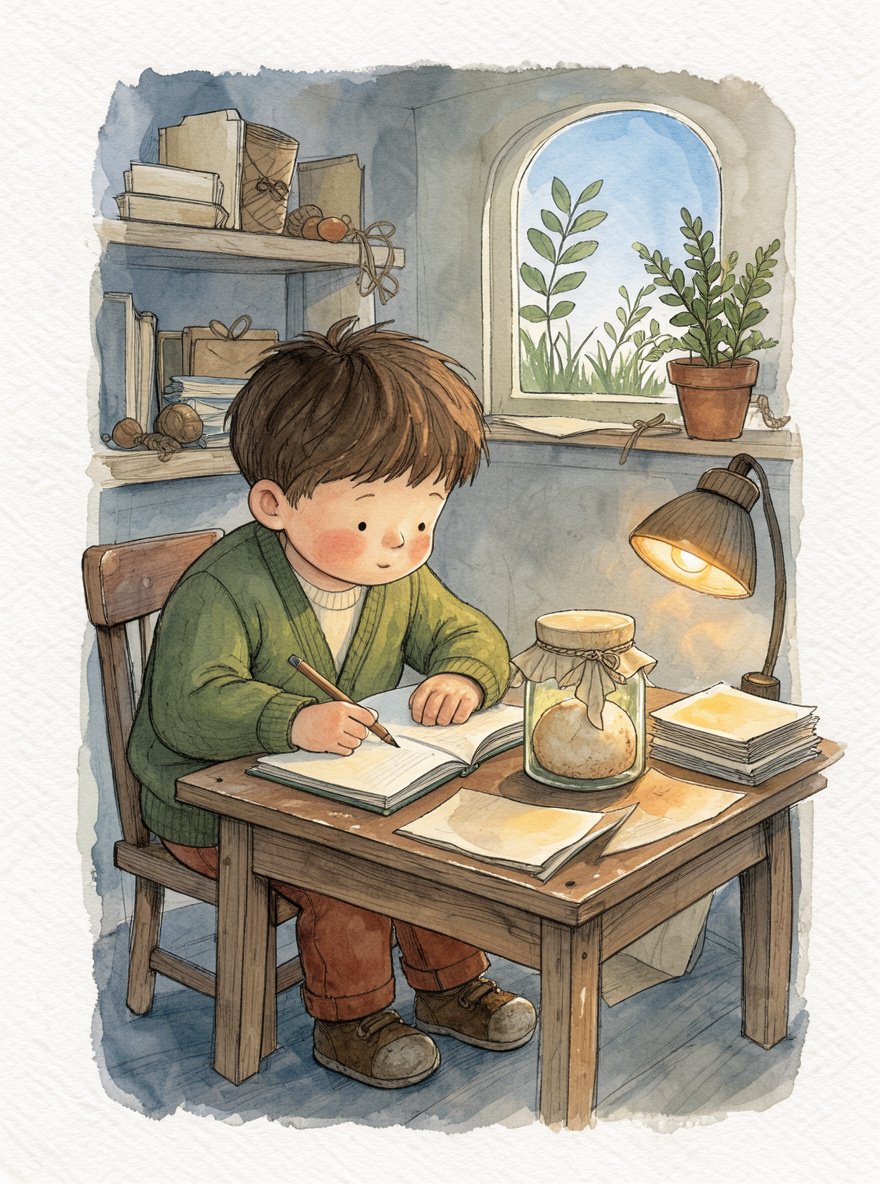
Mr. Dunphy ran the bakery on the corner of Fettle Street, and his complaint, delivered with the weary gravity of a man reporting a genuine catastrophe, was that his sourdough starter — a jar of fermenting flour and water that he had nurtured for nineteen years and named, with what Felix privately considered excessive sentimentality, Bartholomew — had apparently begun to compose music.
"It hums," said Mr. Dunphy. "Low, at first. Then louder, right before it's ready to bake with. I thought I was losing my mind, so I recorded it. Here." He produced, with visible reluctance, a small device, and pressed play.
What emerged was, unmistakably, a low and not unpleasant hum, rising and falling in something very close to a tune.
Felix considered this for rather longer than he had considered Mrs. Carraway's shadow, partly because it was a genuinely peculiar sound, and partly because he had absolutely no idea where to begin. He eventually admitted as much, which Agatha had told him was, nine times out of ten, the correct first move: admitting ignorance got you further than pretending to an expertise you did not have.
"Tell me everything about Bartholomew," Felix said. "Not just the humming. Everything."
It transpired that Mr. Dunphy kept the jar on a shelf directly above his ancient refrigerator, which had developed, over the past several months, an increasingly loud and increasingly irregular rattle whenever its motor struggled to keep the temperature down — which, as it happened, it did most reliably in the hour or two before the starter was ready to use, when the kitchen's ovens had already begun warming the room for the day's first batch of bread.
Felix went to the bakery that very afternoon to listen for himself, and confirmed, after forty minutes of standing uncomfortably close to a vibrating refrigerator with his notebook in hand, that the "music" was in fact the fridge's irregular rattle travelling up through the shelf and into the glass jar, which, depending on how much gas the yeast had produced that hour, resonated at a slightly different pitch — rising as the jar filled with bubbles, and falling as they escaped. Bartholomew was not composing anything. Bartholomew was, in the most literal and least romantic sense imaginable, an accidental instrument, and a remarkably reliable one: the tune reliably reached its highest note at more or less exactly the moment the dough was ready.
Mr. Dunphy received this explanation with visible disappointment, until Felix pointed out that he had, essentially, built himself a free and extremely accurate kitchen timer, purely by accident, over nineteen years, which seemed to cheer him up considerably more than the alternative — that his bread had been secretly magical all along — would have.
By the time Agatha returned the following week to check on her replacement, against her own advice and largely out of curiosity, Felix had resolved four more complaints of a similarly implausible nature: a garden gnome accused of "moving two inches to the left every full moon" (it was the frost, lifting and settling the paving slab beneath it with impressive but entirely explicable regularity); a church bell that rang on its own at exactly 3:14 every Tuesday (a loose bolt, a draught, and the particular angle of the wind off the hill on that one day of the week); a dog that would only bark at the colour blue (true, and never satisfactorily explained, though Felix privately suspected the dog simply had opinions); and a schoolboy's insistence that his homework kept vanishing from his bag between home and school (it had not vanished at all, but was being quietly and systematically removed by his own little sister, for reasons that turned out to be considerably more interesting than any of the supposedly supernatural cases combined).
"You have a gift," Agatha told him, settling into the chair she had occupied for thirty-one years as if she had never properly left it, "though I suspect you'd rather I called it something less mystical."
"I didn't do anything mystical," said Felix. "I just asked more questions than everyone else bothered to ask, and assumed there was a perfectly ordinary explanation until I was proven wrong."
"That," said Agatha, allowing herself, for once, something that might almost have been a smile, "is precisely the gift I meant. Most people arrive here already convinced of the answer. You arrive convinced only that there is one, somewhere, if you're patient enough to go looking for it. It's a rarer quality than you'd think, in a broom cupboard that sees twelve complaints a week and solves maybe three of them properly."
The sign on the door was changed again that winter, this time to read: THE OFFICE FOR UNUSUAL COMPLAINTS. KNOCK TWICE. ASK QUESTIONS FIRST. And beneath it, in smaller and noticeably less exasperated handwriting, someone had added: Bartholomew the sourdough starter is, regrettably, not for sale, no matter how many people ask.
Как вам сказка?
Похожие сказки
-
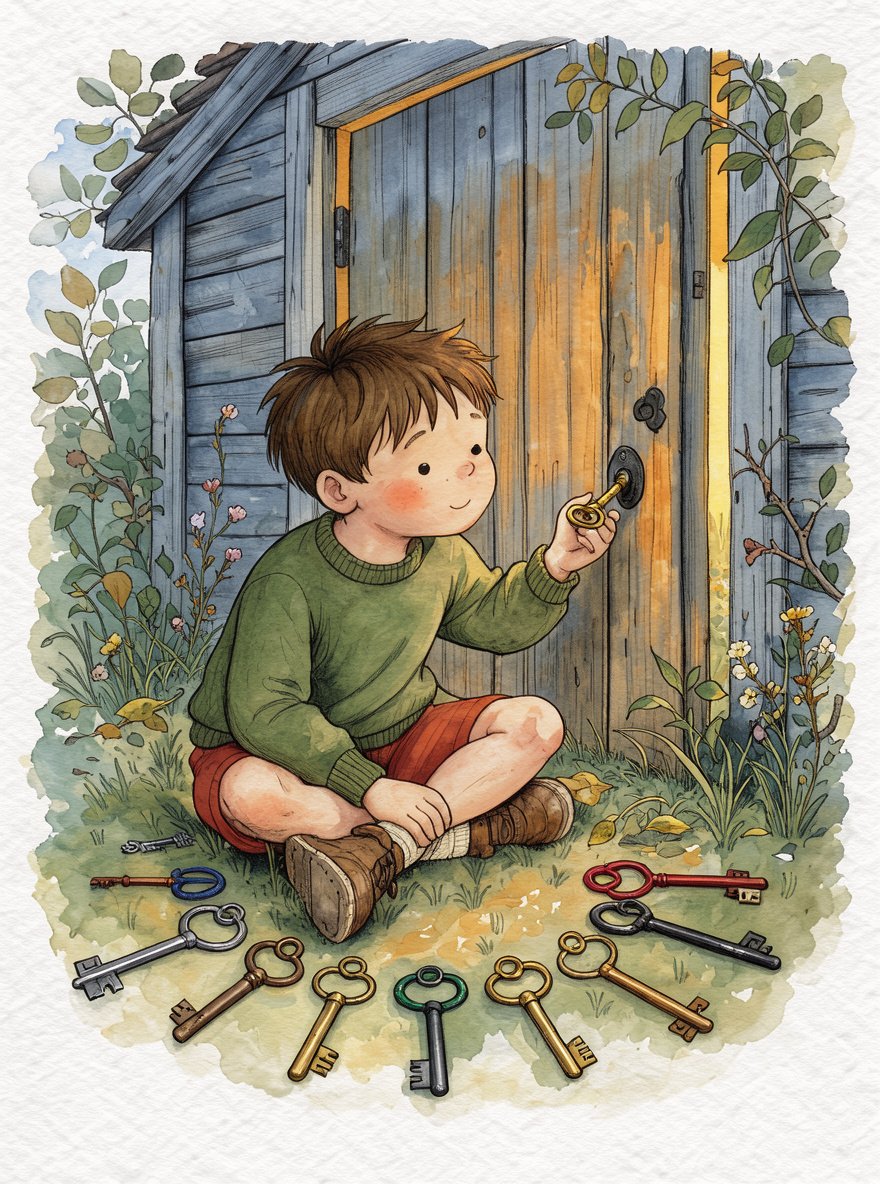 Twelve Keys for One Door
У бабушки Оливера в банке лежат двенадцать разных ключей без подписи, и в дождливую субботу он решает перепробовать их все на старом замке сарая. Каждый ключ открывает что-то своё — музыкальную шкатулку, ящик с письмами, — а самый обычный ключ оказывается нужным для сарая, где ждёт бабушкина записка.
Английский, A2
7–9 лет · 10 стр. · ≈ 4 мин
-
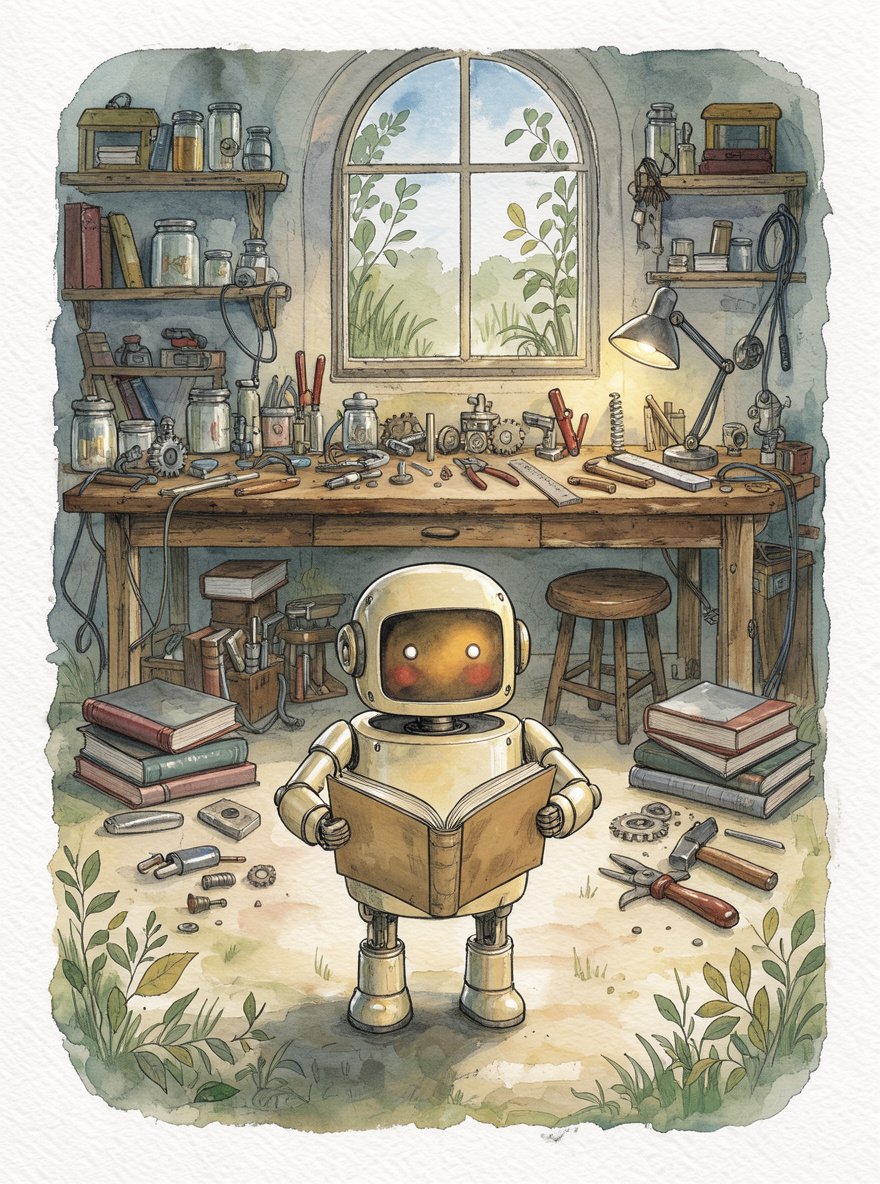 The Inventor Who Forgot the Instructions
Робот-уборщик профессора Фенн наводит порядок буквально: кладёт все вещи туда, где они когда-то упали, потому что никто не объяснил ему, что значит «на своё место». Весёлая история о том, как важно договориться о словах, прежде чем давать задание.
Английский, B1
8–10 лет · 17 стр. · ≈ 7 мин